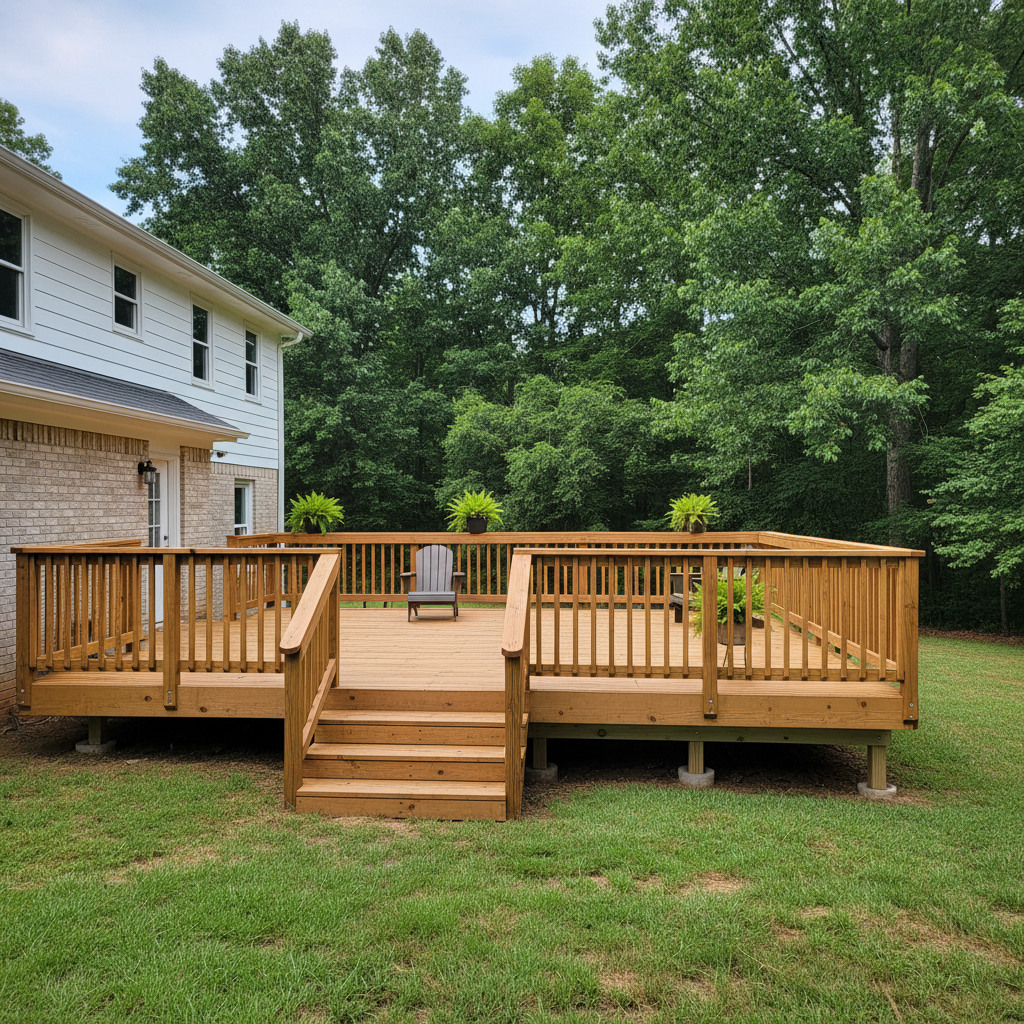
So, What's a Deck Cost Around Here?
Look, I get it. You're probably sick of hearing "it depends" when you ask about deck prices. And, yeah, there's always some truth to that. But I can give you some real numbers, based on what I see every day right here in Warner Robins. A basic, pressure-treated wood deck, maybe 12x16 feet, usually starts around $8,000 to $12,000. That's for a simple, ground-level or low-elevation setup with standard railings and just a couple of steps. If you're thinking something bigger, multi-level, or with composite materials, you're easily looking at the $15,000 to $30,000 range. Sometimes even higher, especially for really elaborate designs or those premium materials.
It's a big investment, no doubt about it. But a well-built deck really adds a ton of value and enjoyment to your home. You're not just paying for wood and nails, you know? You're paying for smart design, permits, skilled labor, and the comfort of knowing it's built right. It will last through our hot Georgia summers and those occasional wet winters.
What Makes the Price Go Up or Down?
A few key things really change the cost. You should understand these before you even start getting quotes.
- Size and Complexity: This one's pretty obvious. A bigger deck means more materials, more labor, and often more complicated framing. A simple rectangle is cheaper than an L-shaped deck or one with multiple levels, built-in benches, or planters. Every corner, every angle, every change in elevation adds time and materials, trust me.
- Materials: This is huge. Pressure-treated pine is your most budget-friendly option. It's tough, easy to find, and looks good, especially if you stain it regularly. Composite decking (like Trex, TimberTech, Fiberon) costs more upfront, sometimes two or three times the material cost of pressure-treated wood. But it's super low maintenance, won't splinter, and comes with long warranties. Then you've got exotic hardwoods like ipe or cedar, which are top-tier choices with top-tier prices.
- Foundation Type: Most decks around here use concrete footings. If your soil conditions are tricky—maybe you're on a slope or have particularly soft soil, which we see in some of our older Warner Robins neighborhoods—we might need deeper footings or more specialized foundation work. That adds to the cost.
- Railing Style: Standard pressure-treated wood railings usually come with most basic quotes. But if you want aluminum balusters, composite railings, glass panels, or even custom metalwork, those upgrades can really push the price up.
- Permits and Inspections: Don't skip these. A good contractor will handle all the necessary permits with the City of Warner Robins and make sure all inspections pass. This isn't really a cost driver as much as it is a non-negotiable part of the process. It just ensures your deck is safe and up to code.
- Site Access and Prep: If we have to haul materials a long way, or if there's a lot of existing landscaping or debris that needs clearing before we can even start, that's going to factor into the labor cost.
What's Usually in a Quote?
When Midway Deck Solutions gives you a quote, we try to be as clear as possible. Here's what you should expect to see:
- Design and Planning: This covers the time we spend designing your deck, making sure it fits your space and your vision.
- Permit Acquisition: We handle getting all the necessary permits from the city.
- Materials: All the lumber, decking boards, fasteners, concrete, and any specific railing components you picked out.
- Labor: The cost for our crew to build the deck from start to finish.
- Foundation Work: Digging and pouring concrete footings.
- Framing: Building the structural support for the deck.
- Decking Installation: Laying down the surface boards.
- Railing Installation: Putting up the chosen railing system.
- Steps: Building any stairs you need to access the deck.
- Cleanup: Hauling away construction debris and leaving your yard tidy.
What's usually not included, unless you specifically ask for it and it's itemized, are things like custom lighting, built-in seating (beyond basic benches), pergolas, elaborate landscaping, or staining/sealing the deck after it's built. Though, of course, we can definitely talk about adding those on.
How to Avoid Paying Too Much (and Getting Scammed)
This is where you need to be smart. Don't just go with the cheapest bid. I've seen too many homeowners regret that decision down the road.
- Get Multiple Quotes: Talk to at least three reputable contractors. This helps you compare not just prices, but also their approach, how they communicate, and what they include.
- Compare Apples to Apples: Make sure each quote details exactly what's included. One contractor's